
Imagine, for a second, a massive climate-controlled hangar. Inside, thousands of sleek, high-tech drones sit in perfect rows—a digital swarm waiting for the signal. This is the reality of modern defense strategy: the "ready-reserve" fleet. In an era where conflict can escalate in the blink of an eye, having hardware on standby isn't just a luxury; it’s a necessity. But there is a silent, microscopic enemy currently eating away at that readiness. It doesn't use missiles or jamming signals. It uses moisture, oxygen, and time.
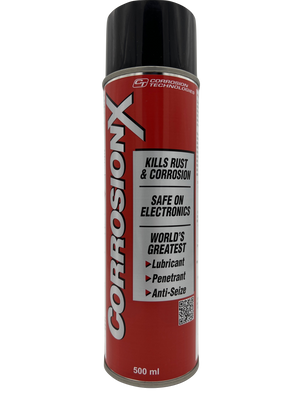
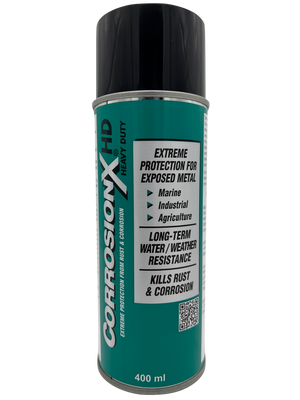
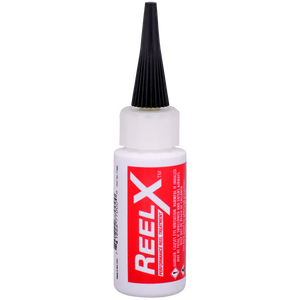
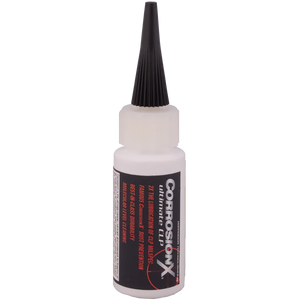
We are talking about corrosion. While we often think of rust as something that happens to old pickup trucks or sunken ships, the most devastating form of corrosion today happens on the scale of microns, deep within the silicon and copper veins of a drone’s motherboard. If you are storing drones for months—or years—to ensure they are ready for a crisis, simply putting them in a box isn't enough. You need a proactive, chemical shield. This is where the heavy hitter comes in: CorrosionX.
In this deep dive, we’re going to look at the technical "why" and "how" of protecting high-value drone assets during long-term storage. We’ll bridge the gap between historical preservation (think antique firearms) and the cutting edge of aerospace maintenance.
Why "Mass-Produced" Doesn't Mean "Invincible"
A typical drone includes:
-
Multi-layer PCBs with dense components and tiny spacing
-
Fine-pitch connectors and board-to-board contacts
-
Solder joints that can suffer from corrosion and contamination
-
Motors with bearings, windings, and magnets
-
Wiring harnesses with crimps and splices
-
Antennas, RF modules, coax connectors
-
Camera gimbals and ribbon cables
-
Metal fasteners sitting next to carbon fiber, aluminum, copper, and sometimes stainless (hello, galvanic corrosion)
When military drones are manufactured in massive quantities to build up a strategic reserve, the focus is often on scale and speed. However, once those units leave the assembly line and enter a storage facility, they are at the mercy of their environment. Even in "dry" storage, humidity fluctuations are a constant.
Electronic components are particularly vulnerable because they are composed of dissimilar metals. When you have different metals in close proximity—say, gold plating on a copper contact—you have the perfect recipe for galvanic corrosion. All you need is a tiny bit of moisture to act as an electrolyte, and suddenly, your multimillion-dollar drone is slowly turning into a very expensive paperweight.
The wires, the solder joints, and the delicate pathways on the PCB (Printed Circuit Board) are the nervous system of the drone. If a single joint becomes brittle or a trace on the board oxidizes, the drone won't just "act up"; it will fail catastrophically the moment it hits the high-stress environment of flight. For military applications, a failure rate of 1% is too high when the mission is critical. This is why we treat drone storage with the same reverence a museum curator treats a 100-year-old rifle.
The Art of the Application: Preparing the Swarm for the Long Sleep
Protecting a drone for storage isn't a "spray and pray" situation. It requires a systematic approach to ensure that every vulnerable point is shielded. When we look at drone anatomy, we have to consider three main zones: the electronics, the mechanical joints, and the structural wiring.
Zone 1: The Brain (Motherboards and Sensors)
This is the most critical area. To protect the PCB, you want to use CorrosionX Aviation or the standard red-label CorrosionX. The process involves a light, misty application. You don't need to soak the board; the polar bonding will ensure the formula creeps into the tiny crevices under surface-mount components and into the "vias" (the holes that connect different layers of the board).
One of the most overlooked parts of drone storage is the sensor suite. Cameras, LIDAR, and ultrasonic sensors often have exposed connectors at the back. A tiny bit of CorrosionX on these pins ensures that when the drone is finally powered up after two years in a crate, the data flow is crystal clear. It prevents the "fuzziness" or signal loss that plagues older electronics.
Zone 2: The Muscles (Motors and Joints)
Drone motors are essentially precision-wound copper coils and high-strength magnets. While the magnets themselves are often coated, the bearings and the stator are prone to surface rust. A light application of CorrosionX into the motor bell prevents the bearings from seizing up.
Think about the folding mechanisms on modern tactical drones. Those hinges and pivot points are often made of alloys that can gall or seize over time. By applying a long-lasting corrosion inhibitor, you ensure that the drone can be deployed from its storage configuration to flight-ready status in seconds, without needing a hit of WD-40 and a pair of pliers.
Zone 3: The Nervous System (Wires and Connectors)
Cabling is the hidden victim of storage. Over time, moisture can "wick" up into the insulation of a wire, corroding the copper strands from the inside out. This makes the wires brittle and increases electrical resistance. By treating the plug ends and any exposed wiring harnesses with CorrosionX, you create a hydrophobic barrier that prevents this wicking action.
Lessons from History: From Rifles to Rotors
There is a fascinating parallel between how we store modern drones and how militaries have stored small arms for centuries. If you look at "cosmoline-packed" rifles from the mid-20th century, the goal was the same: total exclusion of oxygen and moisture.
However, cosmoline was a nightmare to remove. It required hours of boiling water and solvents to get a rifle back into "fight-ready" condition. We don't have that kind of time in a modern crisis. We need "Instant Readiness."
CorrosionX provides the same level of protection as those old-school heavy greases but without the mess. A drone treated with CorrosionX can be taken straight out of the box and flown immediately. There is no "degreasing" phase. This is the evolution of storage technology—moving from passive barriers to active chemical bonding. It’s the difference between wearing a raincoat (which can leak) and having a skin that is naturally waterproof.
The Strategic Advantage of a Corrosion-Free Reserve
Why does this matter on a macro level? Because modern warfare is increasingly a "war of attrition" involving unmanned systems. If a nation manufactures 10,000 drones but finds that 2,000 of them have faulty flight controllers due to storage-induced corrosion, that is a massive strategic failure.
By utilizing high-performance inhibitors like CorrosionX, you are effectively "freezing" the condition of the hardware in time. You are ensuring that the investment made today remains an asset five years from now. This applies not just to the military, but to emergency services, search and rescue teams, and industrial inspectors who keep backup fleets on hand.
The Science of Prevention: What Makes CorrosionX Different?
Most people think of "protection" as a thick layer of grease or a plastic wrap. But for electronics, those methods can actually be harmful. Traditional oils can attract dust or become gummy, while plastic wrap can trap moisture against the device, creating a "greenhouse effect" for rust.
CorrosionX operates on a principle called Polar Bonding. It isn't just a coating that sits on top of the surface. Instead, it carries a light negative charge. Since metal has a natural positive charge, the CorrosionX molecules are drawn to the metal like magnets. They literally crawl under moisture and contaminants to bond directly with the metal substrate.
This creates a film that is ultra-thin (we’re talking microns) but incredibly resilient. Because it displaces moisture rather than just covering it, it stops existing corrosion in its tracks and prevents new oxidation from starting. For a drone’s motherboard, this is the "Holy Grail." You can treat the entire board, and it won't interfere with the conductivity of the circuits. In fact, it often improves electrical connections by cleaning away existing oxidation and preventing the "arcing" that happens when moisture bridges two points on a board.
How to Use CorrosionX for Stored Drones: A Practical Workflow
This is the section most people want, and also where most people mess it up.
Because “apply protection” is not a single action. It’s a sequence:
-
Prepare the drone (clean, dry, stable)
-
Apply CorrosionX strategically (not everywhere blindly)
-
Allow settling and draining (avoid pooling where it shouldn’t be)
-
Package correctly (product + packaging = the real system)
-
Document and standardize (so mass storage doesn’t become chaos)
Let’s walk through it.
Step 1: Start With Clean and Dry (Otherwise You’re Sealing in Trouble)
Corrosion protection works best on a clean surface. If you apply a protective film over salts, grime, or moisture, you’re not protecting the drone—you’re preserving the problem like a museum exhibit.
Practical prep rules that pay off
-
Ensure drones are fully dry before treatment
-
Avoid handling critical metal contacts with bare hands
-
If a unit has been used, remove visible dirt and residues before storage
-
Keep the workspace controlled—if you treat drones in humid air, you’re fighting uphill
This is the unglamorous part. It’s also the difference between a professional storage program and a “hope program.”
Step 2: Apply CorrosionX Where It Matters Most
Here’s the key: you want coverage in corrosion-prone zones without creating new issues like trapped dust, messy pooling, or contamination of optics.
Hitting the high-value targets
-
Battery terminals and power connectors (with care to avoid excess)
-
External ports and exposed metal contacts
-
Cable end connections and harness junctions
-
Ground points and fastener interfaces where dissimilar metals meet
-
Vulnerable metal surfaces in the airframe, especially where coating is thin or scratched
The “less is more” principle
A common mistake is thinking more product equals more protection. In reality, for electronics, excess can:
-
Attract dust
-
Pool in cavities
-
Create messy rework later
-
Migrate to places you don’t want it (like optics or certain sensor surfaces)
You’re aiming for a controlled protective film, not a bath.
Step 3: Protect Electronics Without Treating the Drone Like a Barbecue
Electronic protection is the core of your question: motherboards, electrical components, wires, joints.
The trick is to think like corrosion:
-
Corrosion loves edges, seams, exposed conductors, and contact points.
-
Corrosion doesn’t care about your warranty stickers.
So focus on:
Motherboards and PCB assemblies
If the design allows access, a light protective application can help defend vulnerable regions—especially around connectors, ground points, and exposed pads.
But you must be thoughtful:
-
Avoid saturating areas near optics or sensor apertures
-
Avoid heavy application in places that can trap dust
-
Ensure there’s no pooling that could interfere with mechanical parts or airflow paths
Wiring, joints, and harnesses
Wiring insulation itself doesn’t corrode, but terminations do. That’s why protecting crimps, exposed connector pins, and splices matters.
When you’re storing drones for later rapid use, harness failures are some of the most annoying because they’re often intermittent. Intermittent problems are morale killers.
Step 4: Don’t Forget Mechanical and “In-Between” Areas
Electronic failures get the spotlight, but mechanical corrosion can quietly ruin reliability too.
Motors and bearings
If your storage timeline is long, consider whether motor assemblies and bearings are adequately protected from corrosion and humidity. Even mild corrosion in bearings can translate into vibration and control instability later.
Fasteners and interfaces
Anywhere carbon fiber meets aluminum, or stainless meets aluminum, or plated steel meets something else—those are “argument zones.” Add humidity and you’ll see who wins the argument.
Protecting these interfaces helps prevent:
-
seized screws
-
weakened joints
-
unexpected maintenance delays during deployment preparation
Step 5: Packaging and Storage Environment Matter as Much as the Product
This is where a lot of corrosion-prevention efforts quietly fail: someone treats the drone perfectly, then stores it in packaging that reintroduces moisture or traps contaminants.
Think of storage as a system:
Drone condition + protective film + packaging + facility environment + time
You can’t control time. Control the other four.
What a good storage setup tries to achieve
-
Reduce humidity exposure
-
Reduce temperature cycling extremes
-
Reduce contaminant exposure (dust, salts, fumes)
-
Keep units stable and protected from vibration where possible
Even basic improvements—better seals, controlled handling, and consistent packing—pay back fast when you scale up to mass storage.
Where to Get the Professional Edge in Finland
If you are managing a fleet of drones, whether for tactical use, industrial inspection, or hobbyist racing, you need the right tools for the job. You can't just grab a generic lubricant from the hardware store and hope for the best. You need the specific, non-conductive, polar-bonding power of the CorrosionX line.
For those located in Finland, you have a direct line to these professional-grade products. My company, Tallitkuntoon, is the specialist provider for CorrosionX in the region. We understand the harsh Nordic climate and the unique challenges it poses for electronic storage—from the damp autumns to the freezing, condensation-heavy winters.
You can find the full range of protection products, including the specialized Aviation and Electronics formulas, at our online store: www.tallitkuntoon.fi. Whether you are protecting a single high-end drone or an entire warehouse of equipment, we provide the chemistry that keeps your gear in "fight-ready" condition.
Final Thoughts: Don't Let Your Investment Rust Away
In the world of technology, we spend so much time worrying about software updates and battery cycles that we often forget the basic chemistry of the hardware itself. Metal wants to return to the earth; it wants to oxidize. Our job is to tell it "not today."
Treating your drones with CorrosionX isn't just a maintenance step; it’s an insurance policy. It’s the difference between a fleet that is ready to launch and a pile of scrap metal that fails when you need it most. Keep your motherboards clean, your joints moving, and your connectors shiny.