
Drones are basically flying computers with propellers. And like any computer, they have two mortal enemies: water and time. Add salt air, dust, temperature swings, vibration, and the fact that drones love to land in the least friendly places imaginable—and you’ve got a recipe for corrosion, intermittent electrical gremlins, rough bearings, and premature wear.
So how do you keep a drone reliable when it’s being used for everything from cinematic shots over a lake to industrial inspections in freezing rain… or even military reconnaissance where “maintenance window” is a luxury?
Let’s dig into what makes it useful, how to apply it properly, what to avoid, and how the needs differ between civilian and military-style environments—without turning your drone into a dust magnet or voiding your common sense.
Why Drones Fail in the Real World (It’s Not Always the Crash)
People assume drones die dramatically: one big crash, one broken arm, end of story. In reality, a lot of drones “die slowly,” like a relationship where nobody communicates.
One day your gimbal twitches. Next week your range is weird. A month later you’re getting intermittent compass errors. Then the drone starts acting like it’s haunted. Often, what’s happening is incredibly unromantic:
-
Moisture creeps into connectors
-
Oxidation builds up on contact surfaces
-
Salt leaves conductive residue
-
Dust mixes with humidity and forms grime
-
Bearings dry out or corrode
-
Micro-vibration loosens tiny interfaces
-
Thermal cycles expand and contract solder joints and connectors
Drones live a rough life. They’re exposed to the environment like a motorcycle, but packed with electronics like a smartphone, and they vibrate like an electric toothbrush. It’s a weird combo.
If you fly near the sea, in rain-prone areas, in winter slush, in dusty construction sites, or just store your drone in a not-perfectly-dry place, the environment is constantly trying to “age” your drone faster than it should.
Now here’s the interesting part: corrosion doesn’t need a dramatic flood to start. Sometimes all it takes is humidity + time + oxygen + a little contamination. That’s it. Corrosion is patient. It’s basically the villain that doesn’t monologue.
The Drone Environments That Eat Electronics for Breakfast
Coastal and Marine Air (Salt Is a Menace With a PhD)
Salt air is a special kind of destructive. It’s not just moisture—it’s conductive contamination. Salt residue can create leakage paths on boards and connectors, and it accelerates corrosion like it’s late for a meeting.
If you fly over oceans, lakes with spray, coastal cliffs, boats, harbors, or even just store gear in a salty environment, corrosion protection becomes less of a “nice-to-have” and more like… tooth brushing. Skip it long enough and you’ll regret it.
Cold Weather and Condensation (The Silent Soak)
Cold weather flying introduces a sneaky villain: condensation.
You fly in freezing air, land the drone, then bring it into a warm car or room. Moisture in the air condenses onto cold surfaces—including inside housings and around connectors. It’s like your drone just walked into a sauna wearing a winter coat.
A protective film on vulnerable surfaces can reduce damage from those repeated condensation cycles.
Dust + Humidity (Mud’s Less Polite Cousin)
Dry dust alone is annoying. Dust plus humidity becomes a grime paste that migrates into everything. It can degrade connector contact surfaces and clog moving parts. It’s basically nature’s way of inventing an abrasive conductive gel.
Civilian vs Military Drone Use: Same Physics, Different Stakes
Let’s talk about drones in two worlds: civilian and military. The physics is identical, but the consequences aren’t.
Civilian Use: Reliability, Safety, and Money
Civilian drones are used for:
-
photography and filmmaking
-
agriculture and crop monitoring
-
infrastructure inspections (bridges, power lines, wind turbines)
-
search and rescue support
-
mapping and surveying
-
industrial site monitoring
A drone failing in civilian use might mean losing a day of work, damaging equipment, or creating a safety issue. For professionals, downtime is expensive. For hobbyists, it’s heartbreak (and possibly an invoice).
Military Use: Reliability Under Harsh Conditions
Military drones operate in environments where:
-
dust, sand, salt, and mud are normal
-
maintenance might be limited
-
the drone may be stored in rough conditions
-
exposure to water and temperature extremes is expected
-
failure can compromise missions or safety
Military drone protection strategies often include conformal coatings, sealed enclosures, and ruggedized systems. But not every drone is built like a tank, and not every use case allows perfect sealing. Protective products that help mitigate corrosion and moisture impact can be part of a practical field approach—especially around connectors, power interfaces, and moving mechanisms.
Even if you’re not flying anything tactical, there’s a useful mindset here: treat reliability like a system, not a last-minute fix.
What Makes CorrosionX Different From “Just Any Spray”?
A Protective Film That Doesn’t Quit Easily
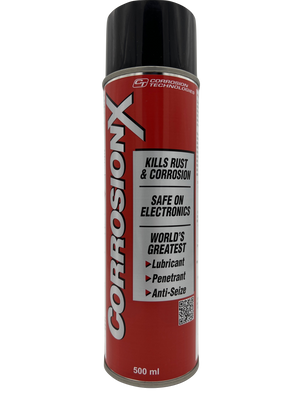
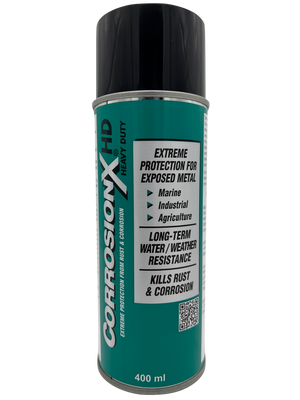
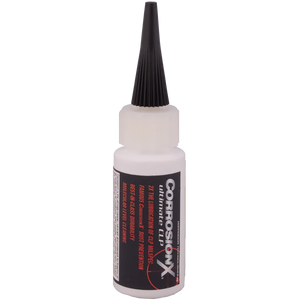
CorrosionX is known for leaving behind a thin, persistent protective film that creeps into tight places—exactly where drones hide their most delicate problems: connector housings, pin interfaces, tiny solder joints, and crevices where moisture likes to hang out.
This matters because drone failures often happen at the micro-level:
-
A connector pin gets a thin layer of oxidation and suddenly signal integrity suffers.
-
A board has a tiny contamination spot, moisture sits there, and you get corrosion creeping along traces.
-
A motor bearing gets a hint of moisture, and now it’s not smooth anymore—it’s “sandy.”
Lubrication That Helps Moving Parts (Especially Bearings)
Drones are full of moving interfaces: motors, bearings, shafts, hinges, gimbals, latches, and little mechanical joints that are easy to forget until they squeak, grind, or start drawing extra current.
CorrosionX is valued because it doesn’t only “protect”; it also lubricates, and it does so in a way that can help moving parts stay smooth and resist wear. Think of it like giving the drone’s mechanical parts a raincoat and a little slip-n-slide—carefully applied, of course.
Electrical Protection: The Big Drone Advantage
Here’s where things get spicy.
Drones are loaded with electrical touchpoints: power distribution boards, ESCs, flight controllers, gimbals, camera connections, antenna leads, GPS modules, telemetry radios. Many problems that look like “software issues” are actually electrical reliability issues caused by oxidation, moisture, or contamination.
A protective coating approach can reduce the chance that environmental exposure turns into failures like:
-
intermittent power delivery
-
noisy sensor signals
-
unreliable gimbal behavior
-
flaky accessory connections
-
unexpected shutdowns due to resistance changes
In other words: CorrosionX can help you avoid the “why is it doing that?” phase of drone ownership.
Where CorrosionX Helps Most on a Drone
This is the part where you imagine your drone as a tiny flying city. There are roads (wires), power stations (battery and distribution), control centers (flight controller), motors (engines), and communications towers (antennas). CorrosionX is not a magic spell you cast randomly—it’s a targeted tool.
1) Electrical Connectors and Contact Surfaces
If you had to pick one high-value area, this is it.
Connectors are basically tiny metal relationships. They work best when clean, tight, and protected. Moisture and oxidation introduce resistance and noise. And drones often have connectors that are:
-
exposed during battery swaps
-
tucked into arms where moisture can linger
-
stressed by vibration
-
exposed to temperature swings
A thin protective film can help keep contacts from oxidizing and can improve long-term reliability—especially when drones are used outdoors frequently.
2) Circuit Boards and Vulnerable Electronics (Used Carefully)
Drones have compact electronics with high-density components. Protection here is about preventing environmental exposure from becoming corrosion, leakage, or contamination issues.
Important note: application technique matters. You don’t want to soak sensitive areas unnecessarily or leave drippy residue that attracts debris. The goal is controlled coverage where it makes sense—especially around exposed board edges, connectors, and known moisture-prone areas.
3) Bearings, Motor Interfaces, Hinges, and Mechanical Joints
Bearings and shafts don’t just “wear out.” They often degrade because lubrication dries out, contaminants enter, or corrosion begins on metal surfaces.
A lubricant that also offers corrosion protection can help extend the smoothness and efficiency of moving parts. That’s a double win because smooth bearings can mean:
-
more efficient motors
-
less heat generation
-
less current draw for the same thrust
-
less vibration (which also helps sensors and video stability)
It’s like reducing friction in your drone’s “cardiovascular system.”
How to Apply CorrosionX to a Drone (The Smart Way)
Let’s be real: the difference between “excellent protection” and “why is my drone sticky?” is technique.
Step 1 — Start With a Clean, Dry Drone
Protection works best on clean surfaces. If there’s existing grime, dust, salt residue, or oil contamination, you’re basically sealing the bad stuff in.
At minimum:
-
wipe external surfaces
-
use proper electronics-safe cleaning methods for connectors if needed
-
ensure everything is fully dry before applying
If you’ve flown near salt water, consider gently cleaning affected areas first—salt residue left behind is not your friend.
Step 2 — Focus on High-Value Targets
Instead of “spray everything,” think “protect the failure points.”
Good candidates:
-
battery terminals and power connectors
-
accessory ports
-
connectors between arms/body and internal harnesses (if accessible)
-
exposed metal fasteners and joints in wet environments
-
mechanical hinges, latches, and moving linkages
Step 3 — Use Controlled Application (Less Is More)
This is where you avoid the rookie mistake.
Better than blasting a spray can directly into your drone:
-
apply to a cloth or swab first for external areas
-
use precise application for connectors
-
avoid over-saturating internal electronics
-
let any excess drain off and wipe it away
You’re aiming for a thin film, not a puddle.
Step 4 — Protect, Then Let It Set
Give it time to settle and distribute. If you immediately power up right after a heavy application, you’re increasing the chances of attracting debris or leaving wet residue in places you don’t want it.
A good mental model: you’re applying a protective “atmosphere” to the surface—not painting a wall.
Common Mistakes (And How Not to Create New Problems)
Mistake 1 — Over-applying Near Sensors or Optics
Cameras, optical flow sensors, IR sensors, and lenses do not appreciate oily films. If you get residue on them, you may introduce focus issues, sensor errors, or strange behavior.
Protect electronics and mechanical parts, but keep sensitive optical areas clean and dry.
Mistake 2 — Turning Your Drone Into a Dust Magnet
Any protective film can attract dust if over-applied. The key is thin coverage, wiping excess, and not treating the drone like a frying pan.
If you fly in sandy environments, be especially careful: lubrication plus dust can become abrasive paste if you’re careless.
Mistake 3 — Ignoring the Battery Interface
Battery connectors are high-current interfaces. Small increases in resistance can create heat and inefficiency. If you protect anything, protect the battery connection area intelligently—clean, controlled, and not drenched.
The “Why” Behind Electrical Protection (A Tiny Nerd Moment)
Let’s nerd out for a second, because it’s useful.
Electrical issues in drones often come from tiny changes:
-
oxidation increases contact resistance
-
moisture creates leakage paths
-
contamination changes surface conductivity
-
vibration loosens micro-interfaces
When resistance increases in power delivery, you get:
-
voltage drops under load
-
heat at the connector
-
reduced peak thrust
-
potential brownouts or resets
When sensors get noisy due to contamination or moisture, you get:
-
unstable flight behavior
-
calibration drift
-
random error messages
-
“it flies fine until it doesn’t”
Protective treatment is like adding resilience. Not invincibility—but resilience. Like wearing good boots: you can still trip, but you’re less likely to suffer because the ground is wet.
Drones in the Field: Practical Scenarios Where CorrosionX Shines
Coastal Filming (Salt Spray + Expensive Gear)
You’re filming waves smashing rocks. Beautiful. Cinematic. Also: corrosive. If you’ve ever left a bike near the sea for a few months, you already know what salt does.
A smart protection routine here is about keeping:
-
connectors protected
-
exposed metal hardware guarded
-
moving parts lubricated so they don’t “crunch” over time
Industrial Inspections (Dust, Vibration, and Repetition)
Industrial inspection drones often fly frequently, land on dusty surfaces, and face vibration cycles all day.
Reducing wear on moving parts and protecting connectors from grime intrusion can make the drone less likely to develop intermittent issues that waste time on-site.
Cold Weather Flying (Condensation Defense)
If you fly in winter and move between cold outdoors and warm indoors, a protective film can help reduce the impact of repeated condensation events—especially around connector housings and exposed contact surfaces.
Maintenance Rhythm: How Often Should You Reapply?
This depends on how you fly:
-
Occasional fair-weather flying: light periodic maintenance may be enough
-
Frequent outdoor use: check connectors and exposed areas more often
-
Coastal / wet / winter / industrial: plan for a more regular routine
A good habit is to inspect:
-
battery connectors
-
motor smoothness (spin test)
-
any gimbal joints
-
accessory ports
-
exposed screws and metal interfaces
If you feel the drone developing “roughness” mechanically or “weirdness” electrically, that’s your cue to inspect and refresh protection where needed.
The Big Picture: Protection Is a Reliability Strategy, Not a One-Time Trick
Here’s the mindset shift that separates “my drone randomly fails” from “my drone is dependable”:
You don’t protect a drone once. You create a system:
-
keep it clean
-
keep it dry
-
protect the vulnerable interfaces
-
inspect regularly
-
address early signs before they become failures
CorrosionX becomes valuable because it supports that system in two ways at once:
-
it helps shield electronics and connectors from environmental exposure
-
it helps lubricate and protect moving parts, including bearings
That combination is especially relevant for drones because drones are both electronic and mechanical—like a tiny flying robot that refuses to live in a clean room.
CorrosionX Availability in Finland
If you’re in Finland and looking for CorrosionX products, they’re available from my company Tallitkuntoon at www.tallitkuntoon.fi
Final Thoughts: Your Drone Wants to Live—Help It Out
Drones are impressive, but they’re not fragile toys either—they’re engineering miracles that you casually launch into wind, moisture, dust, and sunlight like it’s no big deal. The fact they work as well as they do is already kind of ridiculous.
But reliability doesn’t happen by accident. It happens when you treat corrosion and wear as predictable enemies—and you build defenses before the failure.
CorrosionX can be one of those defenses, especially when used with a little strategy:
-
target connectors and electrical interfaces
-
protect vulnerable electronics carefully
-
lubricate moving parts (including bearings) with restraint
-
avoid over-application and keep optics clean
-
maintain a simple inspection rhythm
Do that, and you’re not just “spraying stuff.” You’re extending the service life of the systems that keep your drone stable, efficient, and trustworthy—whether you’re shooting a sunset over a frozen Finnish lake, inspecting a wind turbine in harsh weather, or operating in environments where failure isn’t an option.